
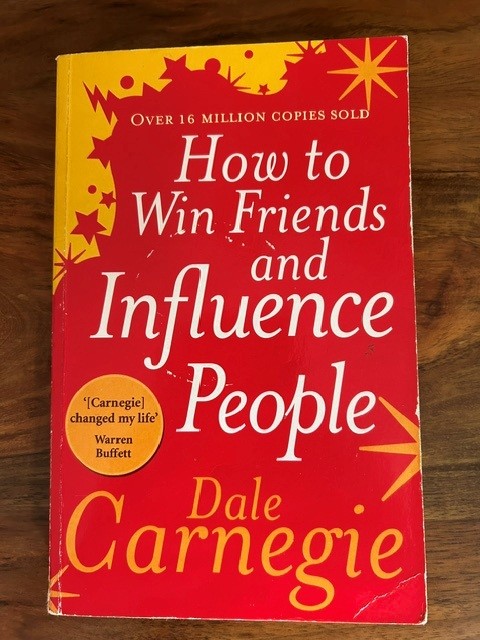
How to Win Friends and Influence People by How to Win Friends and Influence People was the first management book I ever read. I was about 12 years old, and I remember my dad, who was a salesman, reading it at the time. I picked it up, partly out of curiosity, but if I’m being honest, it was mostly because I was nosy. I’m glad I did.
I’ve lost count of how many times I’ve reread it over the years. Even now, I’ll often pick it up, read a chapter or even just a page or two, and I’m reminded of something I’d forgotten or see an old lesson in a new light. That’s the mark of a truly great book.
What amazes me is that it was first published in the 1930s, yet it’s still incredibly relevant today. The technology we use, the way we work, and the pace of business have all changed beyond recognition, but the principles of building relationships, communicating well, and treating people with respect are just as important now as they were then.
There are thousands upon thousands of business and management books out there, and I’ve read plenty over the years. To be honest, most of them are about as exciting as watching paint dry. But this one is different. It’s a simple but powerful read, packed with practical examples that stick with you long after you’ve finished the last page.
The lesson that has stayed with me most is Carnegie’s advice to become genuinely interested in other people. Not because it’s a clever networking trick or a sales technique, but because people can usually tell the difference between someone who’s waiting for their turn to speak and someone who’s actually listening.
As business owners and leaders, it’s easy to focus on getting our point across, closing the deal, or solving the problem. Carnegie turns that on its head. He suggests that if you ask thoughtful questions, listen with real curiosity, remember people’s names, and take an interest in what matters to them, you’ll build stronger relationships almost without trying.
I’ve found that’s true throughout my career. Whether you’re meeting a new client, leading a team, or catching up with a long-standing customer, people remember how you made them feel. They remember the person who listened, who remembered that their daughter had just started university, or who asked how their business was coping after a difficult year. Those small moments build trust, and trust is the foundation of every successful business relationship.
That’s probably why this book has stood the test of time. It’s not about manipulation or persuasion; it’s about understanding people. And while the tools we use in business continue to evolve, human nature really hasn’t changed all that much.
It’s one of my favourite books, not just business books, but books full stop. Some ideas never go out of style, and this is proof that understanding people is one of the most valuable skills you’ll ever develop. If you haven’t read it yet, I can’t recommend it highly enough.
Mike Jack is Director of The One Consultancy